Purchase Order vs Invoice: How Small Businesses Can Approve Purchases and Pay Accurately
A purchase order records what a buyer intends to purchase, while an invoice requests payment from the seller. Understanding how the two documents work together can help small businesses reduce purchasing mistakes and payment disputes.
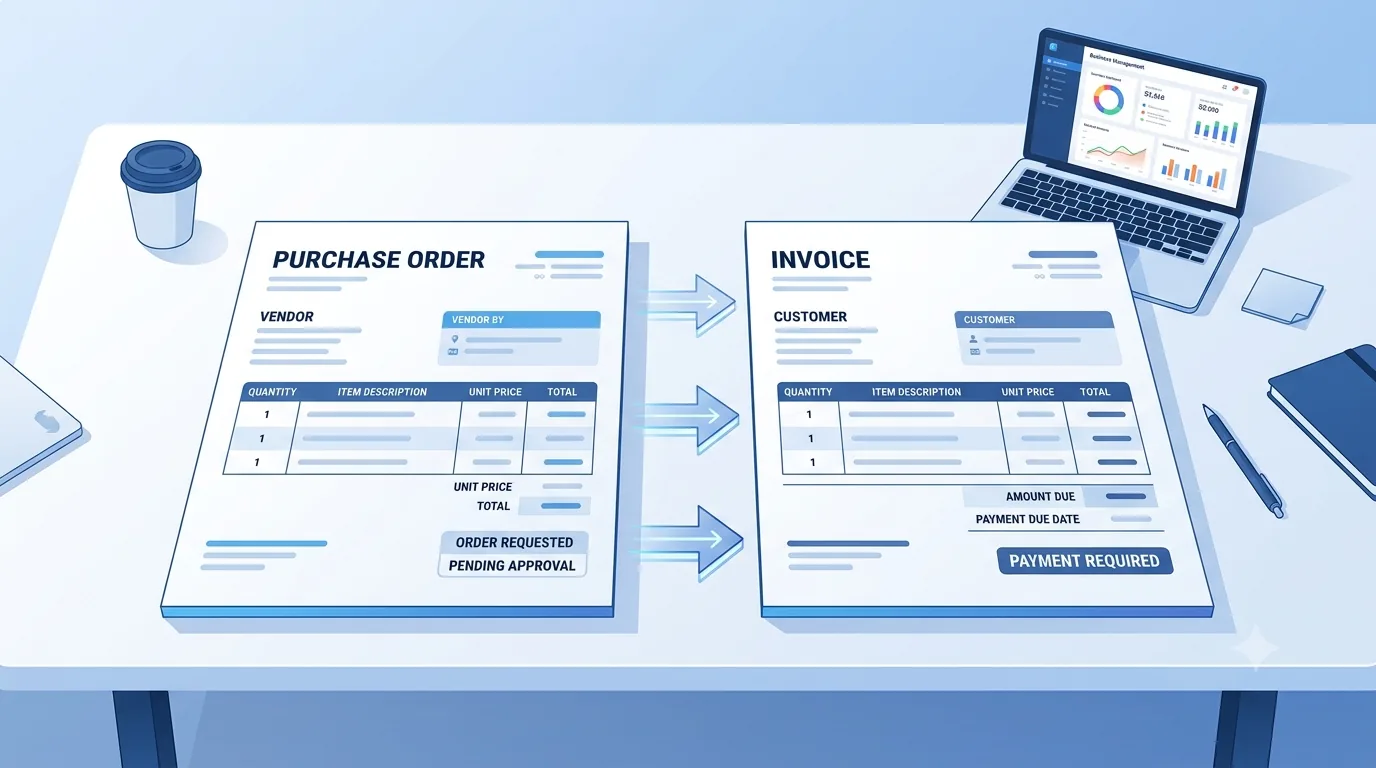
A supplier's payment request arrives, but no one can find the approval—or the total is higher than expected. For a small business, that can mean extra calls, delayed payment, or money spent on an order nobody meant to make. Knowing the difference between a purchase order and an invoice helps prevent that confusion.
A purchase order (PO) records what the buyer wants to purchase and, often, who approved it. An invoice comes from the seller and asks the buyer to pay for goods or services under their agreement. The documents connect the order to payment, but each has a different job.
This guide explains when each document appears, what details to check, and how to set up a process that fits a small business. Tax and recordkeeping rules vary by location, so check the requirements that apply where your business operates.
Purchase order vs invoice: the quick answer
A purchase order is created by the buyer to document and communicate an intended purchase. An invoice is generally created by the seller to request payment for goods or services.
Purchase Order
"This is what we want to buy."
Created by the buyer before or as an order is placed.
Invoice
"This is what you need to pay."
Created by the seller to request payment under the agreed arrangement.
Purchase Order vs Invoice: The Core Difference
A purchase order begins the buying process; an invoice moves an agreed purchase toward payment. In most cases, the buyer creates the PO and the seller creates the invoice. Looking at who issued the document and why makes the distinction clear.
What a purchase order means for the buyer
A PO is a buyer-created document that describes what the business plans to buy, who will supply it, and the expected price and terms. The buyer can use it to record approval before sending an order to a supplier.
Whether a PO creates a contract or has other legal effects depends on the terms and circumstances of the transaction.
What an invoice means for the seller
An invoice is a seller-issued request for payment for goods or services supplied, or for payment due at an agreed stage of the work. It identifies the charge, amount due, payment terms, and due date. The buyer uses it to understand what to pay and when.
Why a PO and an invoice aren't interchangeable
A PO records an intended order before or as the buyer places it. An invoice records a charge and requests payment under the parties' arrangement. An invoice alone doesn't show that the buyer authorized the purchase, and a PO isn't itself a bill.
PO vs Invoice at a glance
| Purchase Order | Invoice |
|---|---|
| Usually created by the buyer | Usually created by the seller |
| Records an intended purchase | Requests payment |
| Used during purchasing | Used during payment |
Follow the Purchase Order and Invoice From Approval to Payment
The order process links the two documents with the delivery or work itself. Roles may overlap in a small business, but each stage should have a clear owner. That makes it easier to spot a missing approval or an incorrect charge.
The buyer creates and sends the purchase order
The buyer identifies a need, checks the budget, gets any required approval, and chooses a supplier. They then create and send a PO with the agreed details. A unique PO number gives the business and supplier a shared reference for later delivery records and invoices.
The seller fulfills the order and issues an invoice
The supplier may send the goods, complete the service, or bill at a milestone set in the agreement. The supplier then issues an invoice based on the agreed timing and terms. For ongoing work, the invoice may cover only the portion completed during a billing period.
The buyer checks, approves, and pays the invoice
The buyer checks the invoice against the PO and, when relevant, confirms that the goods arrived or the work was completed. If key details don't match, the buyer should ask the supplier to explain or correct the charge before approval. Once approved, the business records and pays the invoice under its payment process.
Related guide
7 Common Invoice Mistakes Small Businesses Make and How to Get Paid FasterLearn how to identify common invoicing problems, reduce disputes, and improve your payment process.
Compare the Details in a Purchase Order and Invoice
Both documents identify a buyer, a seller, and a transaction, so some fields may look alike. The PO focuses on what the buyer ordered; the invoice focuses on what the seller is charging. Exact fields vary by business, supplier, and transaction.
Purchase order details that prevent ordering errors
A PO commonly includes a PO number, order date, buyer and supplier details, and descriptions of the goods or services. It may also list quantities, unit prices, delivery instructions, and agreed payment or delivery terms. Clear descriptions and quantities help both sides check that the order is understood.
Invoice details that support accurate payment
An invoice commonly includes an invoice number and date, seller and buyer details, descriptions, quantities, charges, and the total due. It may list applicable taxes, payment terms, a due date, and payment instructions.
Check local rules for required invoice details, including tax information.
Compare the purpose, creator, and timing
Use this table to identify each document and the action it calls for. The exact timing can vary with the supplier agreement, such as when a seller bills in advance or by project milestone.
| Document | Created by | Main purpose | Typical timing | Next action |
|---|---|---|---|---|
| Purchase order | Buyer | Record and communicate an intended, approved order | Before or as the order is placed | Supplier confirms and fulfills the order |
| Invoice | Seller | Request payment for goods or services | After delivery, completion, or an agreed billing point | Buyer checks, approves, and pays |
Match Purchase Orders and Invoices to Catch Problems Early
Matching documents is a basic payment control, not a paperwork exercise for its own sake. It helps a business check that an invoice relates to an approved purchase and reflects what was supplied. For some purchases, the check uses the PO, invoice, and delivery record.
Check the invoice against the purchase order
Compare the supplier name, PO number, descriptions, quantities, prices, and agreed terms. Look for duplicate invoices, unexpected fees, or amounts that differ from the order. If a price or quantity changed, confirm that someone with authority approved the change.
Confirm delivery or completed work before payment
For physical goods, compare the invoice and PO with a packing slip, receiving note, or delivery confirmation. For services, use a sign-off, timesheet, project milestone, or other record that shows the agreed work was done. The right proof depends on the type of purchase.
Resolve discrepancies and keep a clear audit trail
Record questions, supplier replies, corrected invoices, credits, and approval decisions with the related documents. The IRS Publication 583 on business recordkeeping explains U.S. federal tax recordkeeping and supporting documents. Businesses elsewhere should check their tax authority's rules or ask an accountant.
Keep records in a consistent place so you can follow the transaction from approval through payment.
Build a PO and Invoice Process That Fits a Small Business
A small business doesn't need a complex purchasing department to keep a useful paper trail. It does need clear rules for when approval is required and who checks bills. A simple process can work with paper forms, shared files, or accounting software.
Decide when your business needs a purchase order
Use POs for purchases that need advance approval, involve larger amounts, have specific delivery terms, or happen often. Set a dollar threshold and approval rules that suit your budget and risk.
Small routine purchases may not need a PO if your process still records who approved them.
Set a consistent invoice approval routine
Assign responsibility for checking each invoice, confirming delivery or completed work, approving payment, and recording the transaction. Decide how to handle invoices that arrive without a PO, such as checking them against an email approval or signed agreement.
Keep the exception process clear so an unapproved charge doesn't slip through.
Use software or templates to connect records
Consistent PO numbering helps link an order to its invoice, receiving record, and payment status. Templates or accounting and purchasing tools can keep those records together, but make sure the setup supports your workflow and recordkeeping needs.
Review the process as your business grows or changes suppliers.
Simplify your business records
Keep invoices and business information organized with QuickGENBiz
QuickGENBiz helps small businesses manage invoices, inventory, customer credits, and business information from one simple platform.
Explore QuickGENBizFrequently Asked Questions About Purchase Orders and Invoices
What is the difference between a purchase order and an invoice? ↓
A purchase order is generally created by the buyer to document an intended purchase, while an invoice is generally created by the seller to request payment for goods or services.
Who creates a purchase order? ↓
The buyer generally creates the purchase order. It describes what the business intends to purchase and can record the relevant approval, quantities, prices, supplier information, and terms.
Who creates an invoice? ↓
The seller generally creates the invoice. It identifies the goods or services being charged, the amount due, payment terms, and other relevant transaction details.
Can a purchase order be used as an invoice? ↓
Generally, no. A purchase order records an intended purchase, while an invoice is a request for payment. They serve different purposes and are often used together during a purchasing process.
Should a small business use purchase orders? ↓
Purchase orders can be useful for purchases that need advance approval, involve larger amounts, have specific delivery requirements, or occur regularly. A small business can set its own reasonable thresholds and approval rules.
Should an invoice be checked against a purchase order? ↓
When a purchase order exists, checking the invoice against it can help identify differences in supplier, quantity, price, or other agreed terms. For physical goods or completed services, the business may also check delivery or completion records before approving payment.
Conclusion
A buyer's purchase order records an intended and approved order; a seller's invoice requests payment. Checking the invoice against the PO—and against delivery or service records when needed—can catch errors before money leaves the business.
Review your current purchasing and invoice approval process, then update the steps or records that make approvals hard to trace. A consistent process can make it easier to connect the original purchase decision with the final payment.
Make everyday business management simpler
QuickGENBiz brings invoicing, inventory, customer credits, and business insights together in one simple platform for small businesses.
Try QuickGENBiz